

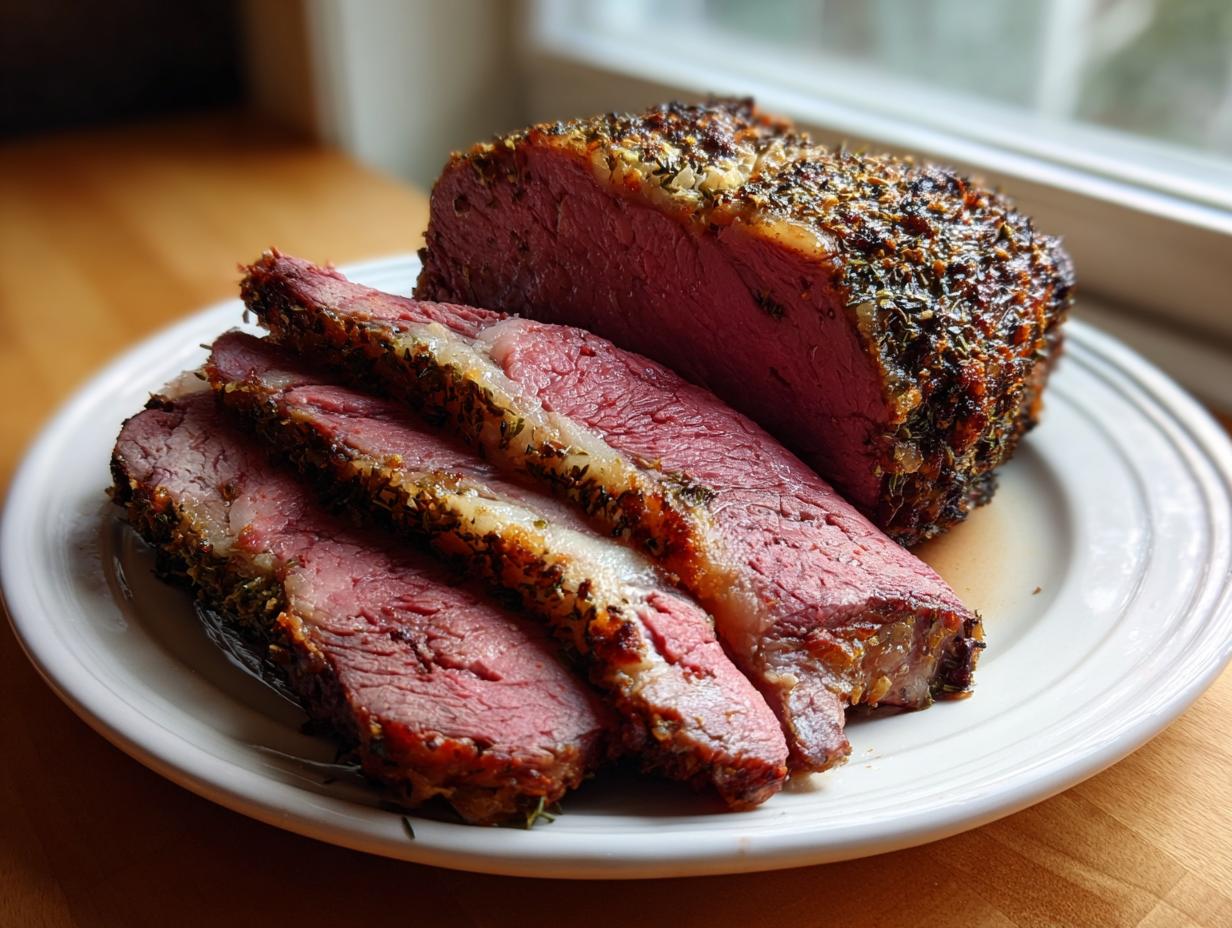
When it comes time for that big holiday dinner, the main event absolutely has to bring the ‘wow’ factor, right? And nothing says celebration like a massive, perfectly cooked rib roast sitting centerpiece on the table. I’m Isabella Rossi, and here at Chefsily, we believe the most impressive meals shouldn’t require you to become a stressed-out professional chef overnight. That’s why I spent so much time perfecting this oven method. Forget dry, grey roasts! This guide is your foolproof map to achieving unbelievably tender, juicy beef with a glorious herb crust every single time, embracing our core philosophy: simple methods lead to maximum joy.
- Why This Herb Crusted Rib Roast is Your New Holiday Centerpiece
- Ingredients for the Ultimate Rib Roast Preparation
- How to Cook Rib Roast Perfect: Step-by-Step Oven Instructions
- Mastering Beef Doneness Temperatures for Your Rib Roast
- Tips for a Show-Stopping Herb Crusted Roast
- Serving Suggestions for Your Special Occasion Dinner
- Storage and Reheating Instructions for Leftover Rib Roast
- Frequently Asked Questions About Cooking a Rib Roast
- Share Your Oven Roasted Beef Success
Why This Herb Crusted Rib Roast is Your New Holiday Centerpiece
Look, roasting a large piece of beef can feel intimidating, especially when it’s the star of your Christmas Prime Rib feast. But honestly, that’s why I developed this recipe—to take away all the guesswork! We’re focusing on flavor synergy and simple mechanics here, which is what Chefsily is all about. This isn’t just dinner; it’s an event designed to impress guests main dish status instantly. Trust me, once you master this, you’ll be making it year after year.
- Guaranteed Tender Roast Beef, edge-to-edge.
- An intensely flavorful garlic and herb butter crust that seals in all the juices.
- A method so reliable, you can focus on enjoying your guests instead of stressing over the oven. Check out my meatloaf recipe if you need something simpler next week!
Achieving Perfect Medium-Rare Rib Roast Every Time
The biggest secret to perfect Medium Rare Roast Beef without that awful grey ring is using two different oven temperatures. We blast it hot initially—15 minutes at 450°F—just to build that beautiful, savory crust we worked so hard to apply. Then, we immediately drop the heat down low to 325°F. This slow roasting allows the interior to cook evenly to temperature, which is why having a digital meat thermometer is non-negotiable for this cut!
Ingredients for the Ultimate Rib Roast Preparation
Okay, let’s talk about what you need to make this spectacular centerpiece shine. First things first: the quality of your rib roast matters! Ask your butcher for a standing rib roast, usually 2 to 3 ribs depending on how many people you’re feeding. Since we rely on that flavor bomb of a rub, we need simple, high-impact stuff. You won’t need much else, but don’t even *think* about skimping on the salt!
Herb Butter Rub Clarity and Quality
This is where the magic happens! You need that 4 tablespoons of unsalted butter to be properly softened—not melted, just pliable enough to mash everything together. Make sure you mince those 6 cloves of garlic finely; we want flavor distributed, not giant chunks of raw garlic hitting the knife later. The recipe calls for dried herbs, which is quick, but if you have fresh rosemary lying around, absolutely chop up a teaspoon of that instead. The aromatics are key to that gorgeous crust. If you’re planning on making a quick roast pan gravy later, having this flavorful drippings bed is essential!
How to Cook Rib Roast Perfect: Step-by-Step Oven Instructions
Alright, time to put that gorgeous herb butter rub to work! This is the part where we ensure that ‘How to Cook Rib Roast Perfect‘ question gets answered with a resounding *yes*. Remember, we need time for the meat to relax, so pull that beauty out of the fridge at least two, maybe even three hours before you plan on turning the heat on. Also, get that oven cranked up to 450°F right away because we don’t want to waste a second warming up!
Prepping the Rib Roast for Maximum Flavor
Before you do anything else, you absolutely must pat down the entire surface of the rib roast with paper towels. I mean it—get it bone dry! If the surface is wet, the high heat will steam the crust instead of searing it, and we are aiming for that deeply browned, savory crust, not a boiled exterior. Letting it sit on the counter while it comes up to room temperature ensures that when it goes into the oven, it cooks evenly from the outside all the way to the center. No cold spots here!
Once it’s dry, slather on that herb butter mixture we just mixed up. Spread it thick and press it right into the meat. Then, pop it onto the rack in your roasting pan. Those first 15 minutes at 450°F are critical for setting that crust. After that sizzle period, immediately drop the oven temp down to 325°F and let it gently roast until it hits that sweet spot temperature we talked about.
The Crucial Resting Period for Your Rib Roast
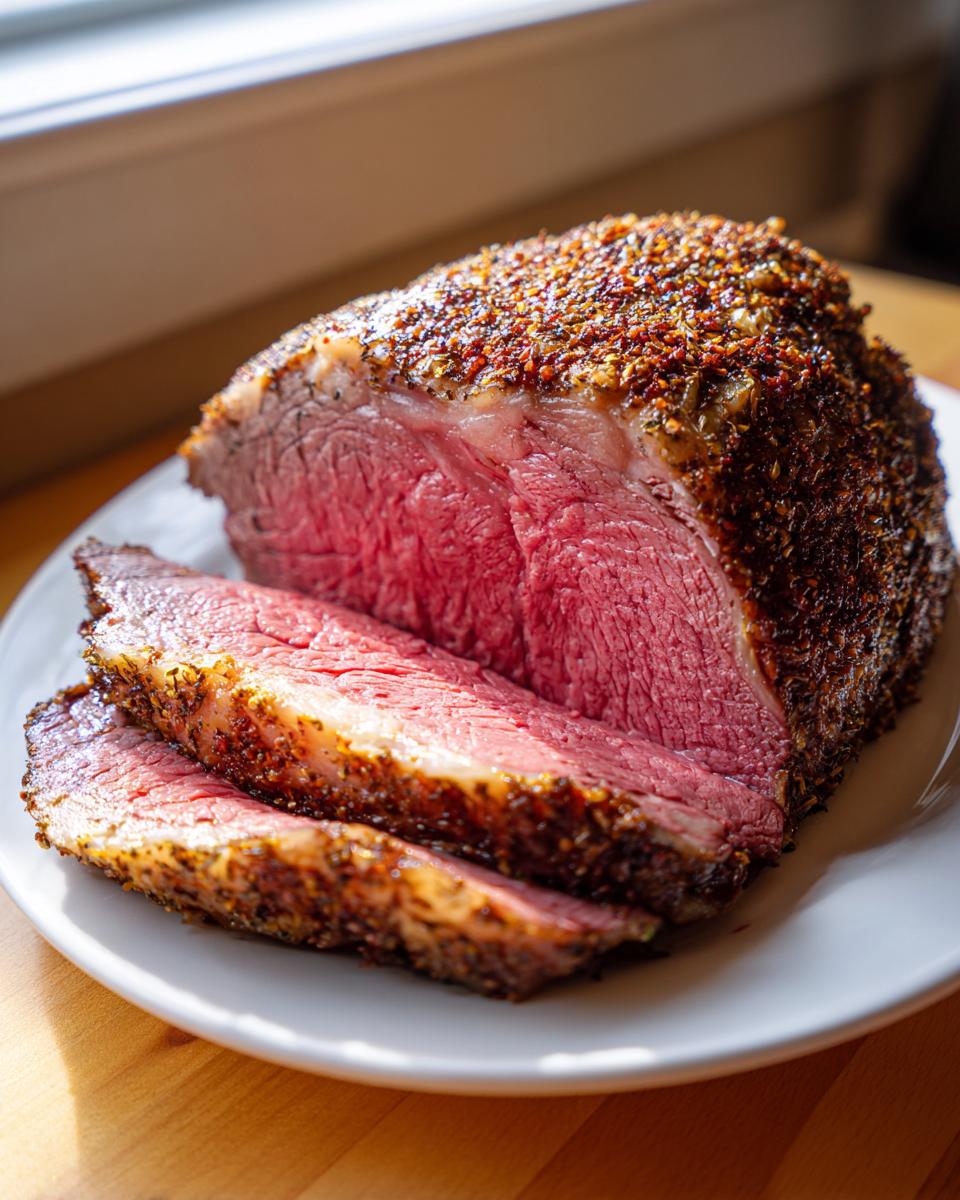
You’ve cooked it, you’ve hit the temp—now, for the hardest step: waiting! When you pull the roast out, it’s still cooking internally, which we call carryover cooking. If you cut it right away, all those beautiful, hot juices will just run out onto the cutting board. Not ideal for a Juicy Beef Roast!
Tent your rib roast loosely with foil—don’t wrap it tight, or you’ll steam that crust you worked so hard on—and let it nap for a minimum of 20 minutes. Seriously, set a timer! If you have a gigantic roast, wait closer to 30 minutes. This resting time allows the muscle fibers to relax and reabsorb those juices, guaranteeing that melt-in-your-mouth texture. While it’s resting, you can throw together some amazing Yorkshire puddings!
Mastering Beef Doneness Temperatures for Your Rib Roast
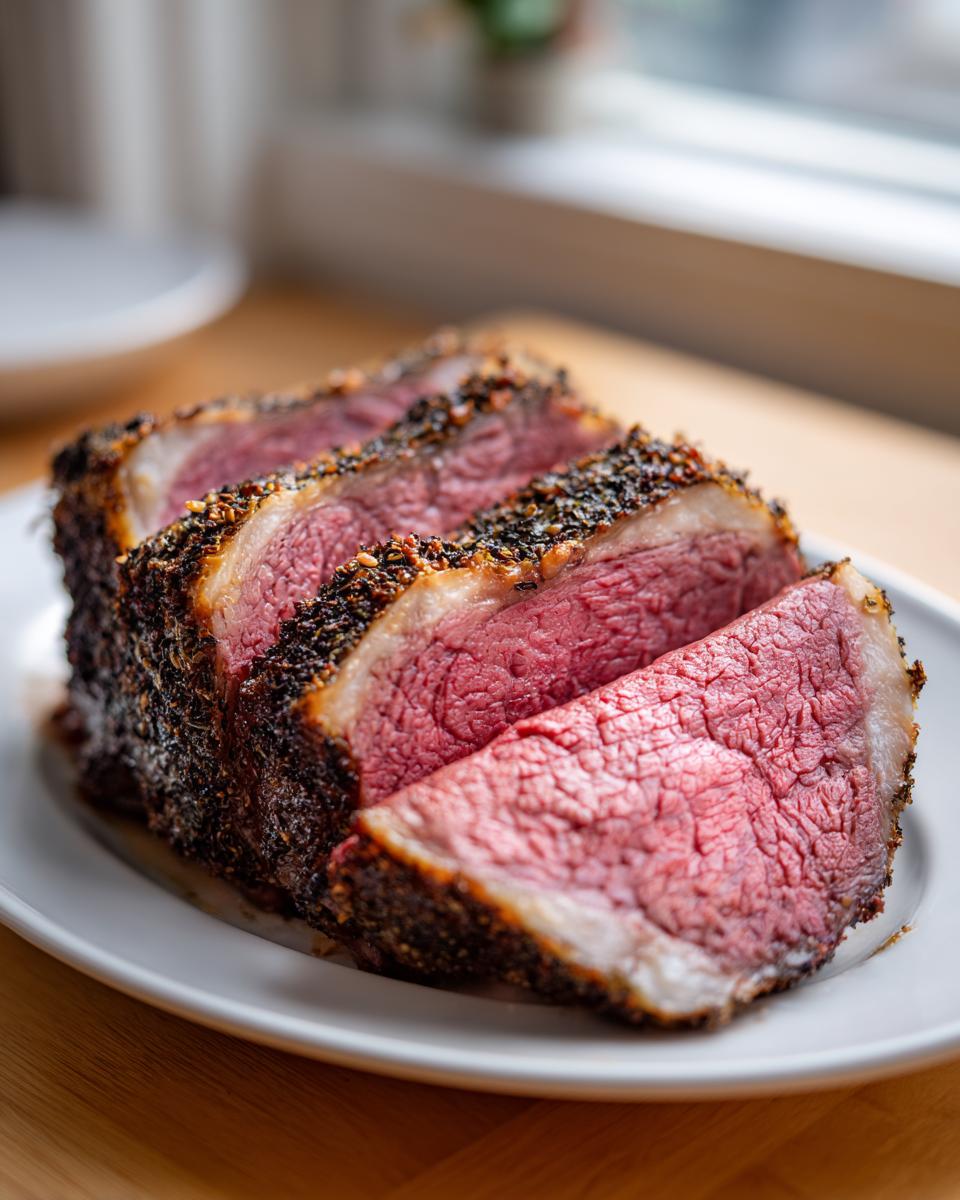
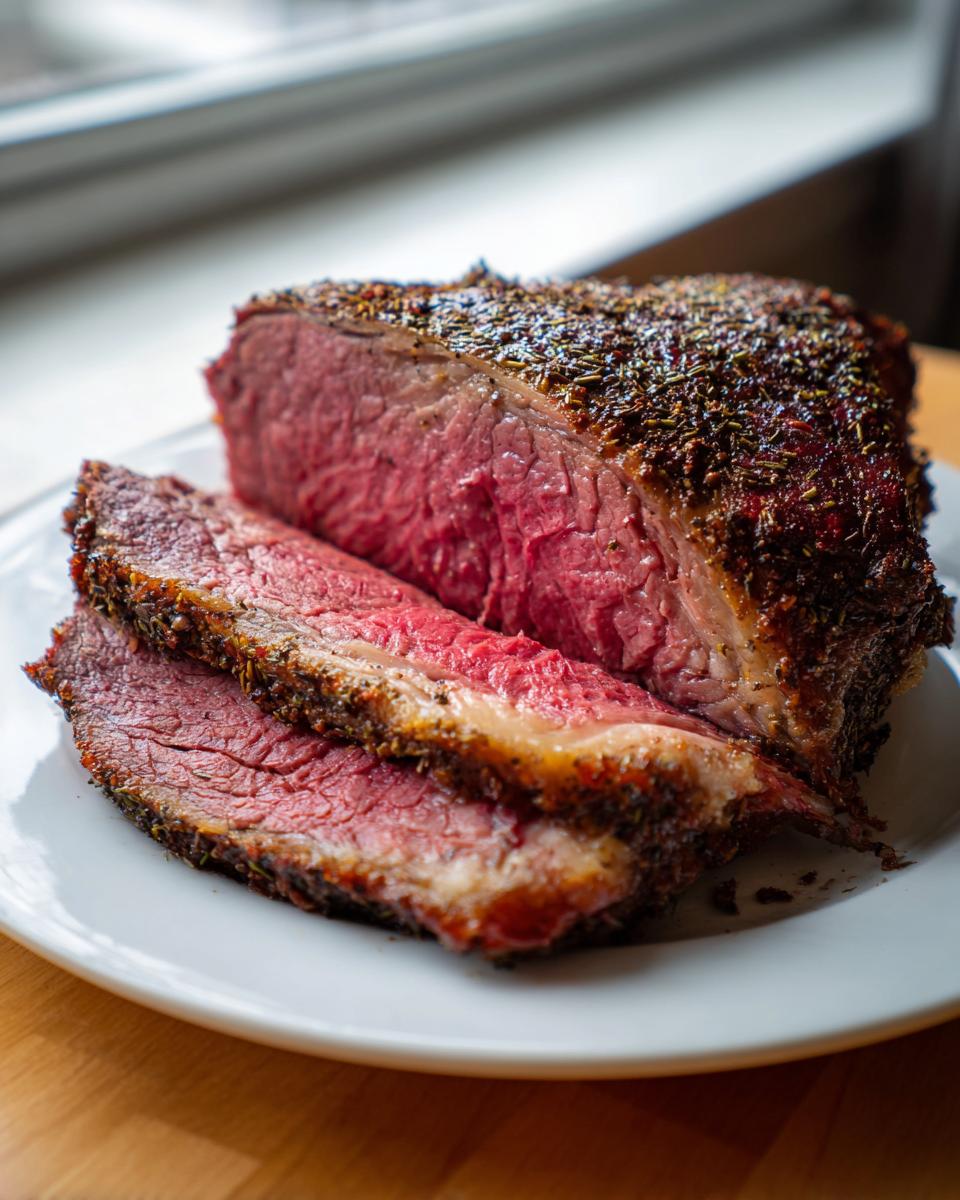
This is where so many people get tripped up, right? You can have the best herb butter in the world, but if you overshoot the Beef Doneness Temperatures, you end up with a dry piece of meat. So, I need you to trust the thermometer—it’s your best friend when cooking an expensive cut like this rib roast. Since this is a celebration dinner, we are aiming squarely for that perfect, rosy pink interior, which means Medium Rare Roast Beef.
The absolute key, and I cannot stress this enough, is to pull the roast out of the oven when your thermometer reads 5 degrees *below* your final target temperature. We use the rest time to finish the cooking process!
Here is my quick reference guide for pulling the roast to achieve the final desired result after resting:
- For Rare: Pull at 120°F (Final: 125°F)
- For Medium Rare Roast Beef: Pull at 125°F (Final: 130°F – 135°F)
- For Medium: Pull at 135°F (Final: 140°F – 145°F)
If you are following the recipe instructions, you’ll be aiming to pull your roast when the center hits 125°F. Don’t fret if you go slightly over; the 20-minute rest is so forgiving, it pulls everything back into line for you!
Tips for a Show-Stopping Herb Crusted Roast
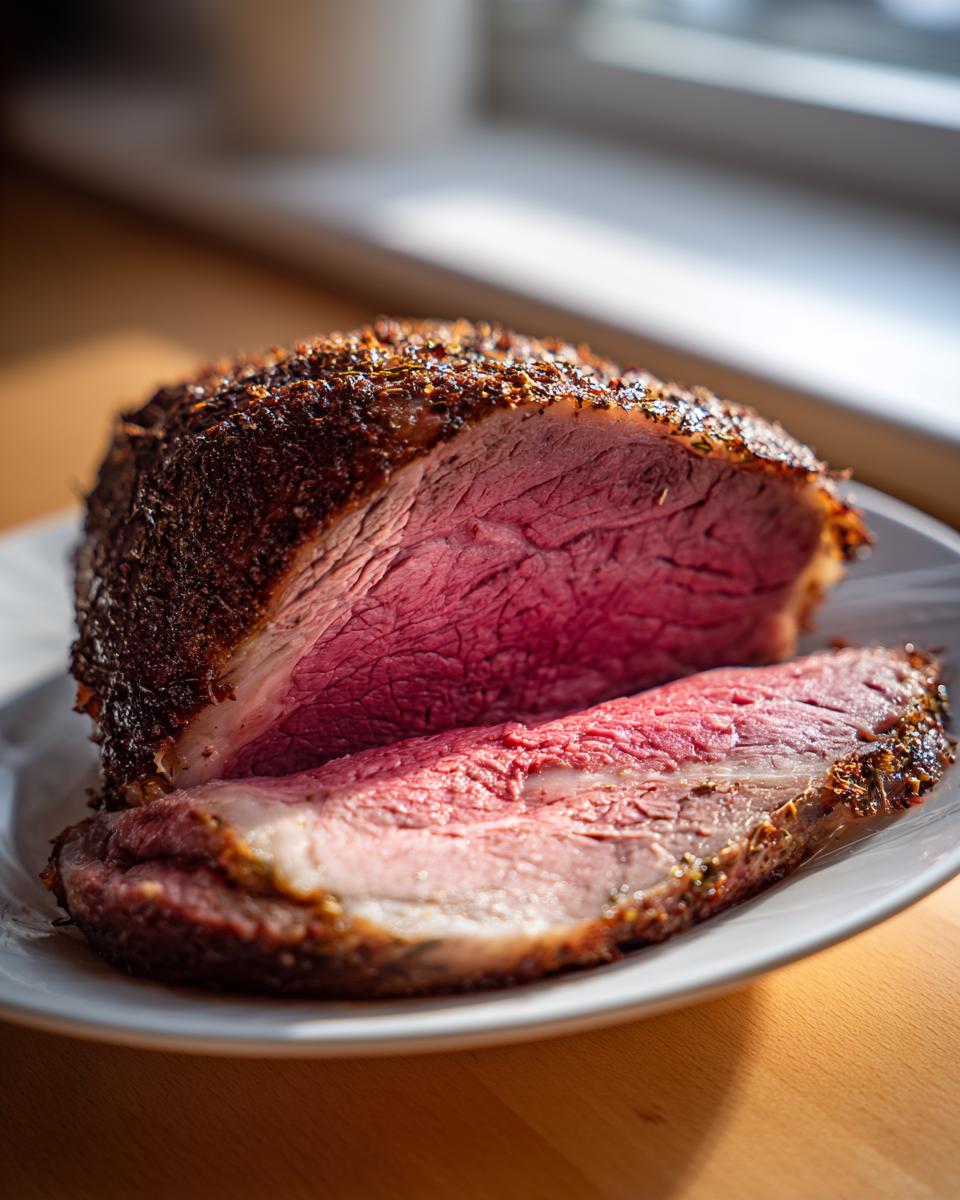
Now that the basics are covered—temperature control and resting—let’s talk about those little details that make people ooh and aah when you bring that Herb Crusted Roast out. First tip, and this is purely about presentation: if you haven’t done it already, ask your butcher to “French” the bones for you. That just means trimming the meat and fat away from the ends of the bones, leaving them clean.
Why do this? Because when you serve it, it looks incredibly professional! It makes carving and plating so much easier, too. If you’re too nervous to ask, you can always tie the bones back onto the roast before the herb butter stage, and then slide them out of the way before serving. Also, don’t forget to save all those savory drippings in the bottom of the pan! Those are liquid gold for making gravy or just spooning over the slices later. Speaking of slicing, check out my tips on making steak fajitas—the seasoning principles are similar!
Serving Suggestions for Your Special Occasion Dinner
You’ve made the star player—this magnificent rib roast—so now we need the perfect supporting cast for your Special Occasion Dinner! A roast this rich absolutely demands creamy sides that soak up all those wonderful juices. I always go for fluffy mashed potatoes because they provide the perfect, comforting base. You can find my favorite ultra-creamy recipe if you need a little inspiration:
- Creamy Mashed Potatoes: Essential for soaking up every last bit of drippings. Click here for my recipe for ultra-creamy mashed potatoes!
- Roasted Root Vegetables: Carrots, parsnips, and maybe some Brussels sprouts roasted alongside the meat catch all that flavor.
- A bright side to cut through the richness, like a simple green salad or perhaps a spoonful of something warm like my roasted butternut squash soup to start.
And obviously, don’t forget those pan drippings! As the recipe notes suggest, those brown bits at the bottom of the roasting pan are pure gold. Take a few minutes after resting to make a quick, simple gravy to pour generously over every slice.
Storage and Reheating Instructions for Leftover Rib Roast
First off, congratulations on surviving the feast! Now, let’s talk about those incredible leftovers. How you slice your leftover rib roast actually matters for storage, which is a little trick I learned early on. If you have big chunks left before carving, wrap them tightly in plastic wrap, then foil, and keep them cold—they’ll last about four days.
However, if you carve the whole thing, store the thin slices separately. Reheating thin slices is tricky because they dry out instantly! My trick is to reheat them very gently in a pan or in the oven with just a splash of broth or au jus beneath them. Keep the heat super low, maybe 250°F, just until warmed through. Seriously, don’t overheat it, or you’ll lose that perfect texture we worked so hard for!
Frequently Asked Questions About Cooking a Rib Roast
I know that roasting a huge piece of beef can bring up a ton of questions. It’s normal to feel a little nervous before tackling a big Holiday Roast Centerpiece! I’ve gathered the most common things everyone asks me about achieving that perfect Oven Roasted Beef result. Don’t worry, we’re making this simple!
Can I use a dry brine instead of the herb butter on my rib roast?
You absolutely *can*! A dry brine—just coarse salt rubbed all over the meat 24 hours ahead of time—is a fantastic way to ensure seasoning penetrates deep and helps your crust. It’s a truly popular technique for best rib roast method followers. However, for this specific recipe, I always lean toward the herb butter because it adds an immediate layer of garlic and herbal flavor right on the outside surface, contributing heavily to that incredible aroma while it cooks. It’s just an extra flavor punch that I love!
What is the difference between a Prime Rib and a Standing Rib Roast?
This is such a great question because people use these terms interchangeably all the time, and honestly, they usually mean the same gorgeous cut of meat! Technically, the term ‘Prime Rib’ refers to the quality grade of the beef (USDA Prime is the top tier). A ‘Standing Rib Roast‘ refers to how the roast is presented—cut from the primal rib section, usually still attached to the bones. So, when you’re ordering, you’re usually asking for a Prime-grade Standing Rib Roast!
How long do I need to rest my roast? Can I skip it?
Please, please, *please* don’t skip the rest! The minimum resting time for a roast this size is 20 minutes, but if you can swing 30, do it. Skipping this step means the juices are still highly pressurized inside the meat when you slice into it, and they’ll flood out, leaving you with a less Juicy Beef Roast. Resting lets those fibers relax and reabsorb everything, which keeps every slice moist and tender.
My oven cooks hot—is there another way to get a good sear?
I hear you! My oven runs a little hot too sometimes. If you’re worried about scorching the herb crust during that first 15 minutes at 450°F, you have two options. Option one is to slightly lower that initial blast to 425°F. Option two, which I actually prefer, is to use the broiler for the last 3–5 minutes instead of the initial high-heat blast, but you have to watch it like a hawk! You want color, not charcoal. If you need a break from beef after this feast, I have some really simple, quick recipes like my chicken tacos!
Share Your Oven Roasted Beef Success
Seeing this amazing rib roast on your table is truly why I love sharing these recipes. The kitchen should be a place of joy, not anxiety, and I really hope this method has given you the confidence to tackle any big cut of meat! If you followed along and ended up with a spectacular, medium-rare centerpiece, please do me a huge favor and come back here!
Let me know how it went in the comments below! Did you stick with the simple salt and pepper finish, or did you get adventurous? Did you use the leftovers for amazing leftovers later? I always love hearing about your Special Occasion Dinner triumphs. And if you have a moment, throwing down a quick star rating (it helps other cooks find this foolproof method!) is always appreciated. If you’re looking for a fantastic dip to serve alongside appetizers before you carve, try my creamy dill dip!
PrintFoolproof Oven Prime Rib Roast with Herb Crust
Make a tender, juicy standing rib roast centerpiece using this simple oven method. This recipe features a flavorful garlic herb butter rub and precise temperature guidance for perfect medium-rare results every time.
- Prep Time: 20 min
- Cook Time: 90 min
- Total Time: 130 min
- Yield: 6 servings 1x
- Category: Main Course
- Method: Oven Roasting
- Cuisine: American
- Diet: Low Fat
Ingredients
- 1 (4-5 lb) standing rib roast (ribeye roast), 2-3 ribs
- 3 tablespoons coarse salt
- 2 tablespoons freshly ground black pepper
- 1 tablespoon dried thyme
- 1 tablespoon dried rosemary
- 6 cloves garlic, minced
- 4 tablespoons unsalted butter, softened
- 2 tablespoons olive oil
- 1 teaspoon onion powder
Instructions
- Remove the roast from the refrigerator 2 to 3 hours before cooking to allow it to come to room temperature. Pat the entire surface of the roast dry with paper towels.
- Preheat your oven to 450 degrees Fahrenheit.
- In a small bowl, combine the softened butter, minced garlic, thyme, rosemary, olive oil, salt, pepper, and onion powder to create the herb butter rub.
- Spread the herb butter mixture evenly over the entire surface of the rib roast, pressing it gently into the meat.
- Place the roast, fat side up, in a roasting pan fitted with a rack.
- Roast at 450 degrees Fahrenheit for 15 minutes. This initial high heat helps create a crust.
- Reduce the oven temperature to 325 degrees Fahrenheit. Continue roasting until the internal temperature reaches your desired doneness (see notes for temperatures). Use a meat thermometer inserted into the thickest part of the roast, avoiding bone.
- For medium-rare (130-135°F), the total cooking time will be approximately 13-15 minutes per pound after the initial 15 minutes at high heat.
- Once the roast reaches 5 degrees below your target temperature, remove it from the oven.
- Tent the roast loosely with foil and let it rest on the counter for at least 20 minutes before carving. The internal temperature will continue to rise during this resting period.
- Carve the roast into thick slices and serve immediately.
Notes
- For a perfect medium-rare beef doneness temperature, pull the roast when the thermometer reads 125°F, as it will rise to 130-135°F while resting.
- If your roast has bones, ask your butcher to either remove them and tie them back on, or to ‘French’ the bones (trim the meat off the ends of the bones).
- Save the pan drippings to make a simple roast pan gravy.
Nutrition
- Serving Size: 6 oz cooked
- Calories: 450
- Sugar: 0
- Sodium: 350
- Fat: 30
- Saturated Fat: 12
- Unsaturated Fat: 18
- Trans Fat: 0
- Carbohydrates: 0
- Fiber: 0
- Protein: 42
- Cholesterol: 140